


Picture this: a routine shift on a high-hazard site. A seal begins to weep, readings drift, and suddenly someone radios in—“We’ve got vapour.” Within minutes, a team must diagnose, isolate energy, communicate clearly, and make decisions with incomplete information.
Most organisations have procedures. Many boast excellent training completion rates. Yet the uncomfortable truth remains: a workforce can be fully compliant on paper and still underprepared in the moment. That gap—between knowing and doing under pressure—is where scenario-based preparedness becomes a strategic HSE opportunity.
📉 Why Compliance-Based Training Falls Short
Traditional compliance training is designed to prove exposure to information: modules completed, quizzes passed, signatures captured. While essential for legal defensibility, it doesn’t reliably build fluency when conditions are messy, time is short, and consequences are high.
Under stress, workers often:
- Default to habit rather than what they once read.
- Lose cognitive bandwidth due to alarms, PPE constraints, fatigue, and noise.
- Struggle with the human layer—miscommunication, unclear roles, hesitation to stop work, or conflicting mental models.
Completion tells you someone attended. Preparedness tells you what they can do.
🎮 Practising Rare, High-Risk Scenarios Safely
High-consequence events are rare, but that rarity creates a paradox: the scenarios we most need to handle are the hardest to practise in reality. Live drills are disruptive and limited. You cannot repeatedly recreate a major release, flash fire, or confined space rescue at the frequency needed to build confidence.
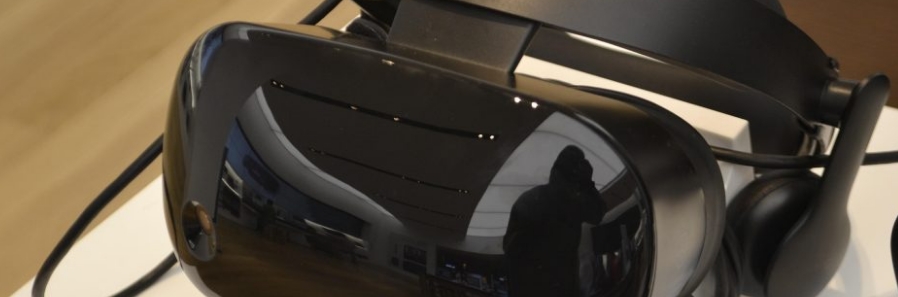
Immersive XR (virtual, augmented, and mixed reality) offers a solution. Done well, XR places learners inside situations where they must notice, decide, and act—safely seeing consequences, repeating scenarios, and practising variations.
Research backs this up:
- A Safety Science meta-analysis found VR training produced medium-to-large gains in knowledge acquisition and significant improvements in retention.
- A quasi-experimental study reported a 30% increase in safety awareness among VR-trained participants.
⚡ The Next Frontier: Training Under Realistic Pressure
One critique of simulation is that trainees know it’s “not real.” If it feels like a game, behaviours may look good in training but collapse on site. The answer is not fear—it’s engineered stressors that create realism while protecting psychological safety.
Evidence shows VR can trigger measurable stress responses. Studies found significant changes in biomarkers like cortisol and heart rate, while pilot tests with first responders showed VR scenarios could induce comparable strain to real-world training.
Stress Emulation in Industry
A strong XR programme builds a “stress dial” into scenarios, scaling pressure as competence grows. Stressors can include:
- Time pressure to isolate or evacuate.
- Sensory load (alarms, radio chatter, restricted visibility).
- Ambiguity (conflicting readings, incomplete information).
- Constrained movement and blocked routes.
- Consequence cues showing escalation without sensationalism.
The goal: calm competence under pressure.
👥 Why Role-Playing Avatars Matter
Most XR programmes focus on environments and equipment. But incident investigations remind us: risk often emerges in the social layer.
Role-playing avatars—scripted or AI-assisted—let teams rehearse critical human interactions:
- A supervisor applying schedule pressure.
- A contractor giving an uncertain report.
- A bystander entering an exclusion zone.
- Teams struggling with unclear command or handover.
This makes training about teamwork and leadership behaviours—clarity, assertiveness, listening, escalation—not just procedural steps.
📊 Measuring Effectiveness: From Completion to Readiness
To treat immersive learning as more than a “nice to have,” measurement must evolve. A readiness approach can track:
- Proficiency: hazard recognition, correct sequence, error rate, time to safe state.
- Decision quality: communication clarity, role allocation, stop work behaviours.
- Stability under pressure: performance consistency as stressors increase.
PwC’s controlled study found VR learners trained four times faster than classroom learners and reported higher confidence in applying skills—mechanisms directly relevant to emergency decision-making.
🚀 Making It Real: Where to Start
For organisations exploring XR preparedness:
- Identify 5–10 critical scenarios from bowties, incident learnings, and controls.
- Design for decisions, not scenery—branching choices and debriefs drive learning.
- Use performance evidence to coach, not just score.
- Blend XR with on-the-job practice and existing processes.
🎯 The Opportunity for HSE Leaders
Scenario-based preparedness is not about chasing technology—it’s about aligning training with the reality of work: uncertainty, competing demands, and pressure.
When workers can safely practise rare, high-risk moments, progressively adding stressors and social dynamics, organisations build capability that compliance certificates cannot capture.
The





Leave a Reply